When I went through my own menopause transition, I did not know anything about the process at all, my mum never talked about it, and we certainly were not taught about it at school (in fact I was convent educated and I remember our biology teacher rushing to the blackboard to erase her beautiful diagram of the reproductive system which she had painstakingly drawn, because one of the nuns was passing the biology lab and she was not meant to teach us this part of the curriculum!)
I’m not sure even now, to what extent Menopause is discussed in early education- if at all. That’s why I decided to go back to basics and explain what is going on with our bodies during menopause in case you are interested !
I didn’t even realise I was going through menopause until I saw a documentary by Davina McCall on TV and the penny dropped… I wasn’t going mad (although my husband may beg to differ on this point!) and all the random nerve and joint pains I was experiencing were not a figment of my imagination- which the doctor seemed to think .
The clinical definition of Menopause is the ‘Final Menses’ confirmed 1 year after menstruation. The average age for this to happen is 51*, but some women experience this much earlier and some surgical & medical procedures (e.g. hysterectomy and chemotherapy) can cause early Menopause .
But prior to this, there is another stage which can start for some women in their mid 30’s to 40’s and in rare cases even earlier (everyone is different), which means the whole process can last for many years, and the symptoms often continue into post menopause.
Lets look at the 3 stages :
Perimenopause – Periods may become irregular as hormone levels (Oestrogen, Luteinising hormone, Follicle stimulating hormone and progesterone) fluctuate wildly at this stage. This is why having blood tests aren’t that helpful with establishing if you are perimenopausal because on any given day your hormones will show different results.
Symptoms at this stage may include: Lack of energy, poor sleep, mood swings, hot flushes and sore joints.
However, everyone’s experience is different and this is influenced by many factors – Good old genetics, behavioural factors e.g. alcohol consumption, diet, exercise, stress factors, life history factors (e.g. wear and tear on joints due to excessive exercise) and environmental influences. At this stage of our lives we have established patterns which may have set in motion inflammatory pathways in our bodies, this concept was first introduced by Prof Franceschi in 2000 as ‘Inflammaging‘.
When our hormones begin to fluctuate during Perimenopause our body attempts to regain balance (homeostasis) by readjusting other hormones in response, this, in addition to the other factors mentioned above, can worsen the effects of chronic inflammation. At this stage the effects may be subtle and not too noticeable (but for some symptoms can be debilitating).
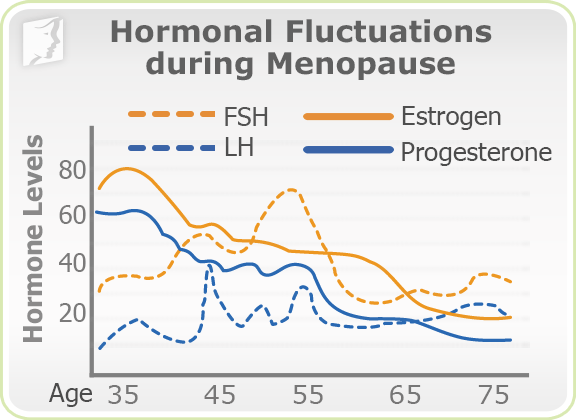
Menopause– is when both Oestrogen and Progesterone levels can drop significantly as our ovaries go into reproductive decline, this, in turn effects levels of the other reproductive hormones as they are all linked and work in conjunction with each other.
More about Oestrogen.
As well as regulating the menstrual cycle, when oestrogen declines during Menopause, it has a significant impact on many biological functions including bone and muscle density, brain function, cardiovascular regulation, blood vessel elasticity, nerve function and many more.
Decline in Progesterone, which works in conjunction with Oestrogen, will effect period regulatory, vaginal dryness, mood swings, bloating and breast tenderness .
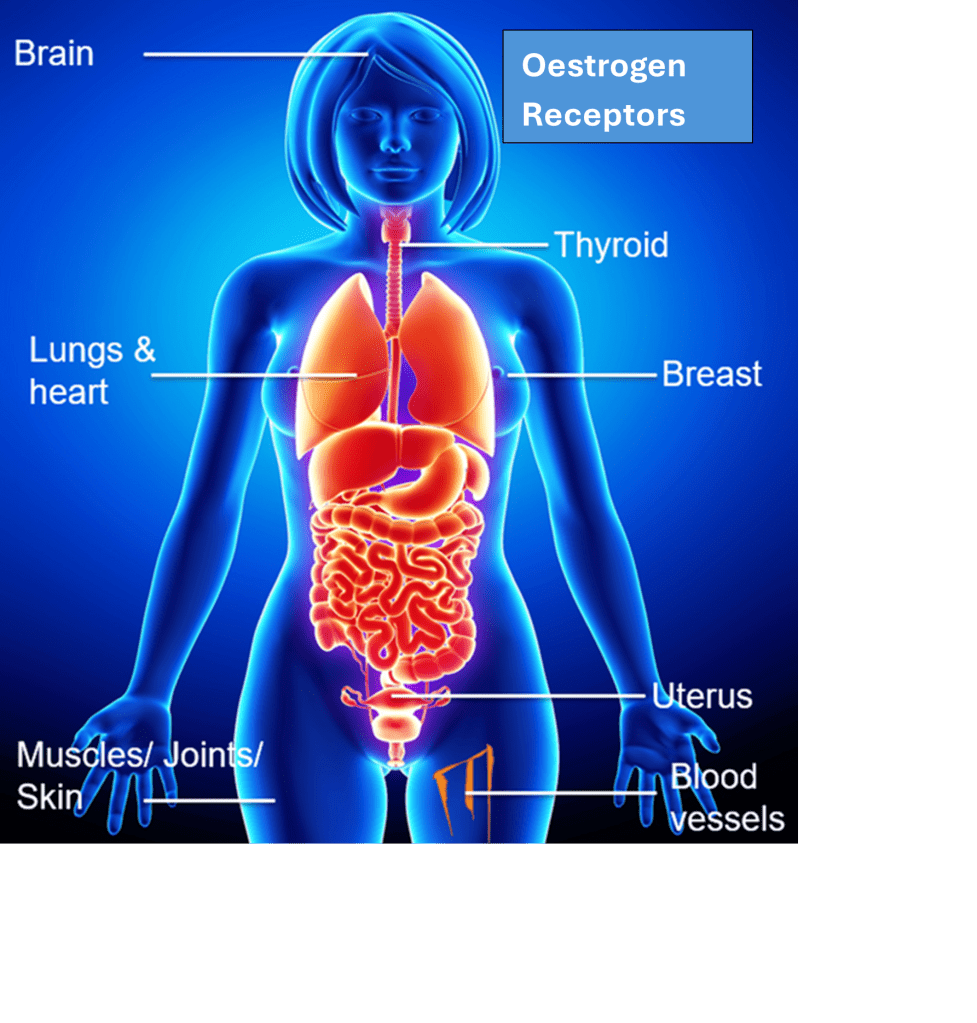
As these hormonal changes happen in Menopause many organs in our bodies are effected and may become dysregulated (basically they do not work as efficiently) when the body attempts to rebalance. For example we have Oestrogen receptors in our brain, lungs, heart, breasts, muscles and joints.
If we think of hormones as chemical messengers which carry information to different parts of our bodies, and if you consider that we have glands such as our Hypothalamus in our brain which act as a type of control centre for different processes such as temperature control. These organs detect fluctuations in hormones and send out chemical messengers to other glands to produce hormones which will bring things back into balance. A great example of this is our ‘sleep wake cycle’ or circadian rhythm which can be greatly effected by declining hormonal levels during menopause (but also by many other factors such as stress which in turn effect hormonal changes)- This deserves a blog all on its own so I won’t get into it now.
Post Menopause– is defined as the time after Menopause when a women hasn’t had a period for over a year (ref: After the Menopause – NHS inform) symptoms may be less noticeable, but can be worse if a women is carrying excess weight or has poor nutrition, is struggling with alcohol addiction or reliance, is under or over exercising, is very stressed and particularly if not sleeping well.
At this stage symptoms can include: Osteoporosis, Heart disease, arthritis, and Type 2 diabetes.
The good news is, all of these diseases can be prevented by early interventions using evidenced nutrition and lifestyle changes, and even in post menopause, Type 2 diabetes and high blood pressure can be reversed by changes to Nutrition , exercise , stress management & sleep , which is where my 12 week program comes in. If you are finding my blogs interesting please subscribe so you don’t miss the next one and share the link to my website to others who need to know a bit more about what they are experiencing.
I am passionate about sharing the knowledge I have gained (and continue to gain), and particularly that younger women understand that if they change their nutrition and lifestyle early, their menopause transition can be a lot easier .
I’d like to reference Dr Wendy Sweet (Phd) who I am currently doing another course with all about ‘Menopause weight loss’ and who has taught me most of what I now know about Menopause. Her Website is mymenopausetransformation.com – check it out.
I’d love any feedback (good or bad)- and if you or anyone you know, are struggling with anything I have mentioned above and are interested in my program, please write a comment below or contact me at Nicky.k.dear@gmail.com
Thanks for reading this far !
Nicky – Nickydearhealthcoach.com
1*(Mckinlay, 1996)




 Nicky Dear Health Coach
Leave a Reply