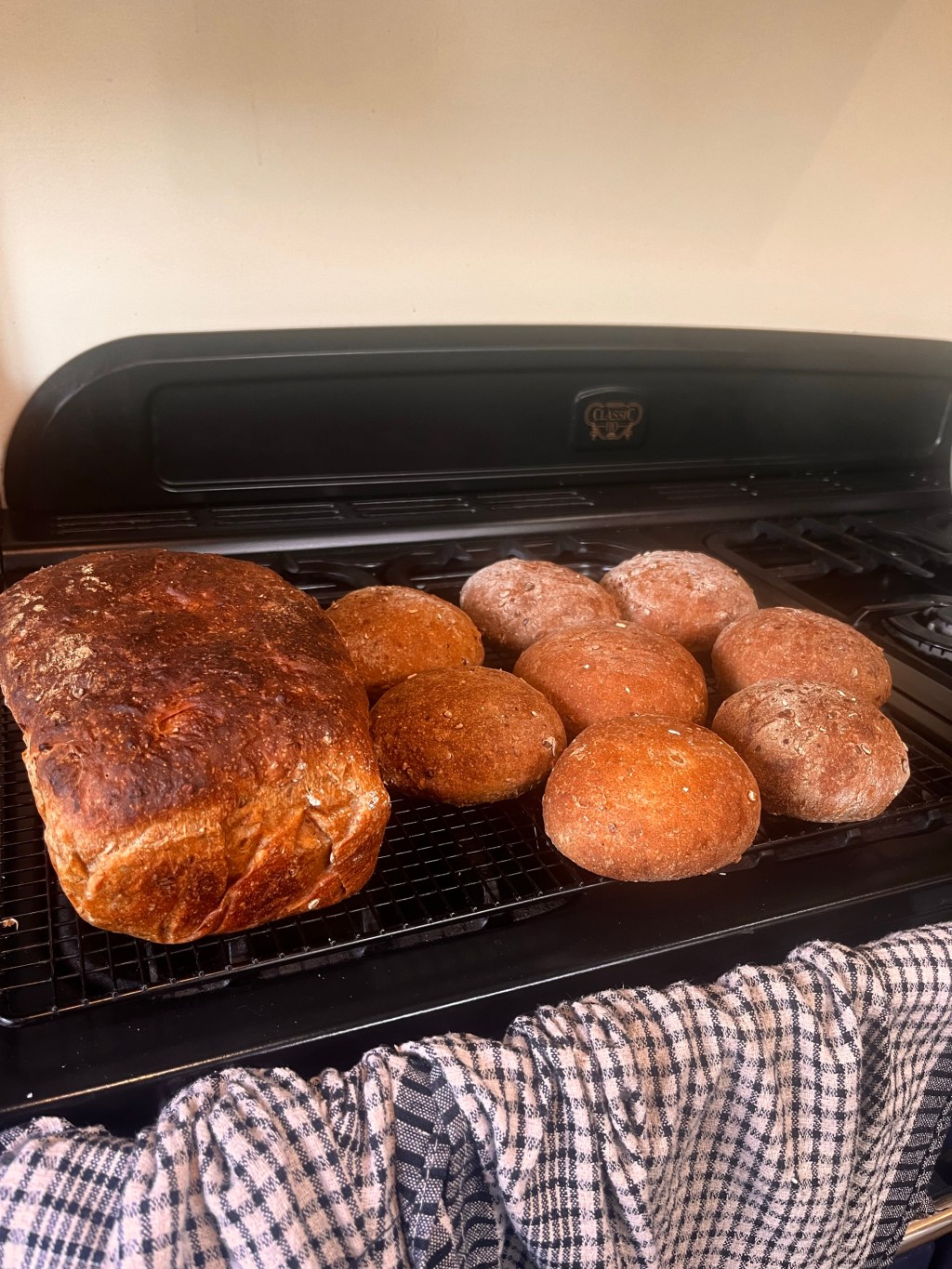
You probably know that sour dough bread is supposed to be good for you, but have you ever wondered why?
Gut health is now known to be fundamental to our overall health and particular in Menopause, although more research is needed in this area. In a recent paper which reviewed available literature on the Gut Microbiome, female sex hormones and menopause, the authors* concluded that more research with large study populations is required to really understand this. However, what we do know is that many Menopause symptoms such as chronic fatigue, weight gain, anxiety, depression and sleep disturbance are caused by chronic inflammation. Inflammation often begins in the gut. I am currently studying with Dr Wendy Sweet to get a deeper understanding of the mechanics of this process and will talk more about it in future blogs.
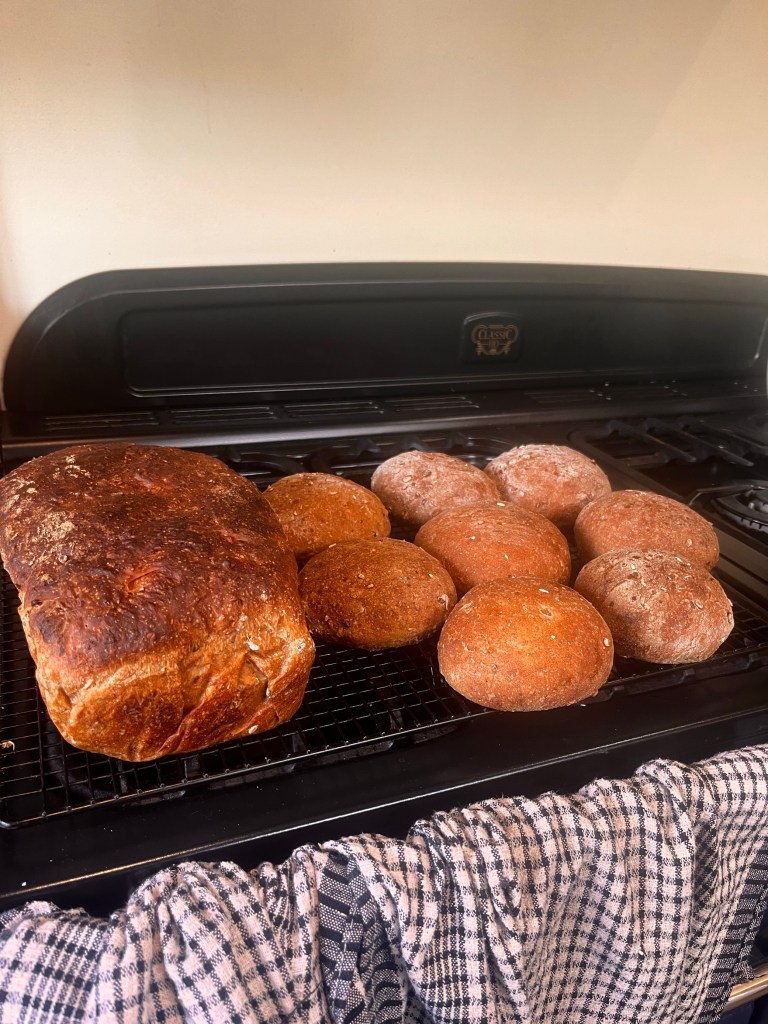
I have been making my own bread, ever since changing my diet 3 years ago in a bid to improve my gut health and reduce my troubling Menopause symptoms. The other day when I was shaping some dough made with my own sour dough culture to make a loaf (and marvelling at how sticky it was), I thought about writing a blog to illustrate the difference that a small amount of culture makes to bread, and why it is much better for our gut health .
I have some lovely chefs to thank for my love of sour dough. In my Food industry days I was lucky enough to work with some amazingly talented people who came from many different backgrounds and worked in the same company as me and from whom I learnt so much about food and ingredients over the years.
When we moved all of our Research & Development (R&D) teams into a state of the art Innovation & Technology centre, two of the chefs did a ‘bakery day’ in which they set about educating us all about all things bakery (not to mention sharing the delicious breads and pastries they created that day).
As a memento of the day they gave anyone who wanted it a ‘baby sour dough culture’ which they named Eric. This was 11 years ago, but I still have Eric’s progeny in my sour dough culture which I’ve fed and nurtured ever since.
Sourdough is created by fermenting flour and water over a period of between 5 -10 days depending on the temperature in the kitchen and the amount of wild yeasts, moulds and other microbes in the air and the ‘bacterial load’ of the flour i.e. how many bacteria are present at the start of the process. Once you have a culture, you can keep it in the fridge and “feed it” every few weeks to make it “lively” again. You simply take a small amount of the culture, add some flour and water and leave it to ferment, discarding the rest.
So why go to all this trouble? Well you can of course buy nice sour doughs, but they are not all as we might expect. It is better to have wholegrain and seeded if possible to give you the best possible nutrition with added fibre and a lower GI (Glycaemic index) which basically means it takes longer to digest and release energy, so you don’t get a massive blood sugar spike and then feel lethargic once your blood sugar settles back to normal. The added benefit of making your own is that you know exactly what is in it, it won’t have any added sugar, too much salt or added preservatives .
The process of fermentation increases the bioavailability (how much your body can absorb and utilise) of certain nutrients within the grains, seeds etc. within the dough. Lactic acid bacteria present in the sourdough can help promote healthy gut bacteria. Sourdough has the added advantage of being much easier for your body to digest, some people who are sensitive to gluten even find they can digest sourdough with no issues.
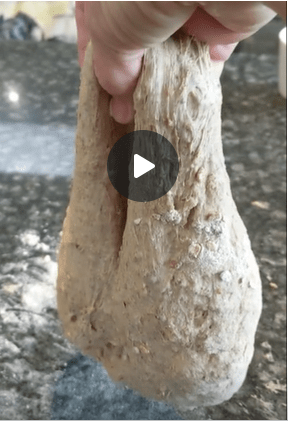
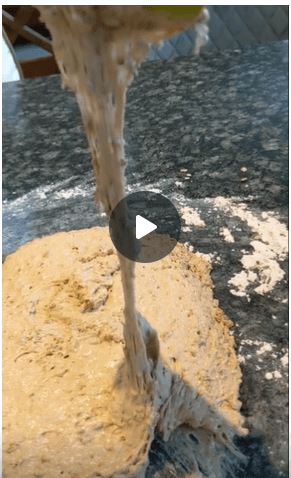
With the below illustrations I have used the same recipe for both doughs, except I have added my culture to one and not to the other, but both have normal yeast as well.
True sourdough would not contain any added yeast and would take much longer to rise because you would be relying on the wild yeasts and other bacteria fermenting the dough over a longer period of time this is known as retarded fermentation, this will create a more open bubbly texture and have more of the complex and characteristic sourdough flavours. So this is a slight cheat in order to illustrate my point… plus, this is a great way to make a quick sourdough if you are an impatient baker like me! Although aficionados of sourdough making will be waving their rolling pins in anger at this suggestion (actually they don’t tend to use rolling pins… but you know what I mean).
The first image is the normal yeasted dough. You can see that its is still quite “elastic ” this is because the gluten has been developed by kneading and all the water and oil are fully held in the dough, so it is dry and smooth to the touch. (Full video available on my Facebook)
In the second image the dough is much more sticky and wet because the sourdough has started to break down the gluten and it is much shorter in structure – therefore the little microbes have saved your body the effort of some of the process of digestion, this can really help with bloating, IBS and other digestive problems people experience when eating bread. (Full video available on my Facebook)
Of course sour dough is still a carbohydrate rich food, so if you are thinking of trying sourdough, experiment to see how your body reacts, always use a wholegrain option for added fibre and add seeds such as sunflower and pumpkin for added Zinc/Magnesium and always use a good quality Olive oil in your recipe as opposed to butter or other oils which are sometimes used, and as I aways say to my clients everything in moderation!
“Let food be thy medicine and medicine be thy food ”
Thank you for reading,
Nicky- nickydearhealthcoach.com
P.S I would like to add a small apology to my more scientific foody friends, this article is not very scientific, but hopefully relatable to those lesser mortals reading this blog (thank you Jane Annett for the word ‘relatable’) but feel free to add some science facts in the comments!
*Brandilyn A Peters, Nanette Santoro, Robert C Kaplan, Qibin Qi. Spotlight on the Gut Micribiome in Menopause Recent insights. Int J Womens Health.



 Nicky Dear Health Coach
Leave a Reply